
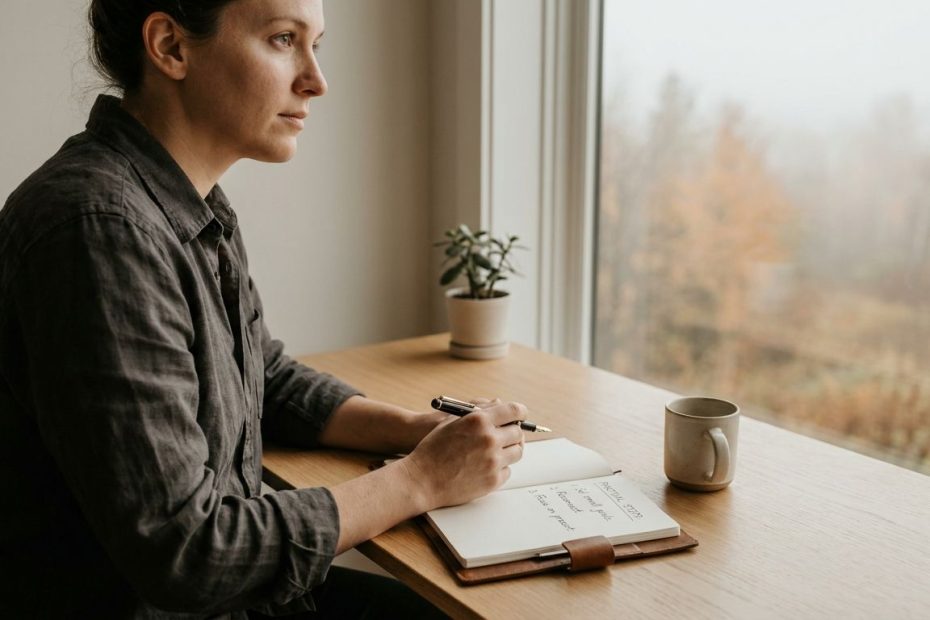
Confidence during instability grows when you stop measuring your worth by what you can’t control and start proving self-trust through small, repeatable actions. You don’t need life to feel settled before you begin feeling capable again.
When life shifts under you, confidence often feels like the first thing to go. A job change, financial pressure, a move, a relationship ending, or a long stretch of uncertainty can make even simple decisions feel loaded. This guide gives you practical ways to rebuild inner stability without pretending everything is fine.
Why Instability Hits Confidence Harder Than You Think
Instability does more than disrupt your schedule. It interrupts the feedback loop that usually helps you feel capable: you make plans, follow through, see progress, and trust yourself more. When your circumstances keep changing, that loop gets harder to complete. You may start believing you’ve lost confidence, when what you’ve really lost is predictability.
Research on major life events has linked frequent negative changes, including job loss, divorce, and relocation, with lower self-efficacy during unstable periods. Self-efficacy is your belief that you can take useful action and influence outcomes. When life keeps changing faster than you can adjust, your mind may treat uncertainty as evidence that you’re failing. That’s painful, but it’s also workable.
The first repair is to separate external instability from internal ability. A disrupted life doesn’t mean you’re weak, behind, or incapable. It means your usual sources of certainty aren’t available right now. Confidence returns when you create smaller sources of certainty that don’t depend on everything going your way.
Stop Waiting For Certainty: Reframe Your Relationship With Control
You build confidence faster when you stop waiting for a guarantee and start sorting life into what you control, influence, and release. This reduces mental noise and gives your energy a clear place to go.
Uncertainty drains confidence because it tempts you to scan every possible outcome. Your mind looks for the one perfect plan that will remove risk, but unstable seasons rarely offer that. Instead, you need a control map. Put your actions in one column, your influence in another, and everything outside your control in a third.
Your actions include what you say, what you schedule, what you spend, what you apply for, who you contact, and how you care for your body. Your influence includes conversations, preparation, follow-up, asking for help, and setting boundaries. The release column includes other people’s reactions, hiring decisions, market conditions, timing, and past choices you can’t redo.
This doesn’t make uncertainty pleasant. It makes it smaller. Each time you act inside your real control zone, you give your nervous system proof that you’re not powerless. That proof matters more than forced positivity.
Build Confidence During Instability With Small Daily Wins
Small daily wins rebuild confidence by giving your brain current evidence that you can follow through. The win needs to be clear, doable, and tied to your own effort.
A small win is not a vague goal like “be productive” or “get life together.” It’s concrete: send one email, walk for ten minutes, pay one bill, wash the dishes, update one line of your resume, make one phone call, or write down tomorrow’s top task. Research in the Journal of Experimental Social Psychology connected three small, self-set daily tasks with increased self-efficacy over a short period. The tasks worked best when they were specific and quickly achievable.
Use a three-minute anchor when you feel frozen. Choose one action that takes three minutes or less and complete it before negotiating with your mood. Make the bed, open the document, fill the water bottle, step outside, text one supportive person, or set one appointment reminder. Tiny completion beats big intention when your confidence is low.
Track these wins in plain language. Write “done” beside each one instead of judging whether it was impressive. Your mind needs proof, not a performance review. Over time, those small completions rebuild the link between your choices and your identity.
Swap The Inner Critic For A Coach Using Self-Compassion
Self-compassion helps confidence because it lowers the fear of failure without lowering your standards. You still take responsibility, but you stop using shame as your fuel.
The inner critic often gets louder during unstable periods. It says you should’ve known better, moved faster, chosen differently, or handled things with no fear. That voice may sound disciplined, but it usually narrows your thinking. A harsh mind is not always a clear mind.
Self-compassion gives you a better script. Replace “I’m failing” with “This is hard, and I can take one useful action.” Replace “I can’t handle this” with “I’ve handled difficult things before, and today only requires the next step.” Replace “Everyone else is doing better” with “Comparison won’t solve this; one grounded action will help.”
A meta-analysis of self-compassion interventions found that they can increase state self-confidence and reduce fear of failure. That matters when life feels unstable because fear can make every choice feel like a final exam. A coaching voice keeps you accountable without turning your pain into proof that you’re inadequate.
Design A Stability Scaffold With Flexible Routines
A routine gives your day a predictable shape when life feels unpredictable. It doesn’t need to be strict; it needs to be repeatable enough to remind you that you still have agency.
Think of a stability scaffold as the few repeatable habits that hold you up when everything else is shifting. Choose one morning anchor, one midday reset, and one evening close. Your morning anchor could be water, light, movement, or writing the day’s top three tasks. Your midday reset could be a short walk, a meal away from a screen, or a two-minute breathing exercise.
Your evening close matters because unstable seasons can blur the line between effort and exhaustion. Pick a shutdown cue: review tomorrow’s priority, clear one surface, plug in your phone away from the bed, or write one thing you handled well. The goal is not a perfect routine. The goal is to give your mind familiar markers that say, “There is still structure here.”
The American Psychological Association has connected consistent daily routines with feeling more in control during stress. That fits what many people notice in real life: when the day has no rhythm, your emotions have to work harder. A flexible routine reduces that load.
Lean On The Right People Without Feeling Like A Burden
Support strengthens confidence when it helps you think, act, and feel less alone. You don’t need everyone’s opinion; you need a few steady people who can meet you with honesty and care.
When life feels chaotic, isolation can look like strength. You may tell yourself that other people have enough going on, that you should handle it alone, or that asking for help proves you’re not capable. That belief keeps confidence trapped inside your own stress loop. A grounded conversation can interrupt the loop and help you see options again.
Choose support based on the kind of help you need. Some people are good for emotional steadiness, some are good for practical planning, and some are good for accountability. Don’t ask one person to meet every need. A simple request works better: “Can you help me think through my next two steps?” or “Can you check in with me after I make this call?”
Receiving support does not erase self-reliance. It gives your self-reliance better conditions. Confidence is easier to rebuild when you’re not spending all your energy pretending you’re unaffected.
Use Values, Not Outcomes, To Measure Your Worth
Your confidence becomes steadier when you measure yourself by values-based action instead of unstable outcomes. Outcomes matter, but they’re not reliable enough to carry your identity.
During uncertain seasons, outcomes can lag behind effort. You may apply for jobs and wait, save money and still feel stretched, show up for a relationship and still face hard conversations, or make healthy choices and still feel emotionally tired. If your worth depends only on immediate results, confidence will rise and fall all day. Values give you a steadier measuring stick.
Choose three values you can practice under pressure. They could be honesty, steadiness, responsibility, patience, courage, care, learning, or discipline. Then turn each value into behavior. Honesty becomes making the difficult call. Steadiness becomes keeping one routine. Responsibility becomes reviewing your budget without attacking yourself.
This is how you build identity independent of outcomes. You stop asking, “Did life reward me today?” and start asking, “Did my actions match who I’m choosing to become?” That shift gives confidence during instability a stronger base than approval, timing, or luck.
Stop Comparing Your Unstable Season To Someone Else’s Stable One
Comparison weakens confidence when you use another person’s visible progress as evidence against your private struggle. You need cleaner inputs when your mind is already overloaded.
When your life feels uncertain, other people’s stability can feel personal. A promotion post, a new house, a calm family photo, or a career update can make your own situation feel worse. The problem is not seeing other people succeed. The problem is treating partial information as a fair comparison.
Set comparison boundaries when you’re rebuilding. Limit feeds that trigger panic, avoid checking up on people when you’re tired, and replace passive scrolling with one active step. If you want to use someone else’s progress well, turn it into information rather than self-punishment. Ask what skill, habit, or support helped them, then choose one lesson you can apply.
Your confidence needs evidence from your own life. Someone else’s timeline can’t tell you what you’re capable of under your current pressures. Measure your progress against your last honest effort, not someone else’s highlight reel.
Make Decisions Before You Feel Ready
Confidence often follows action, not the other way around. Waiting until you feel ready can keep you stuck when instability has already lowered your sense of certainty.
During unsettled periods, your brain may demand complete clarity before allowing movement. That sounds safe, but it can turn every decision into a waiting room. Use a smaller decision standard: choose the next wise action based on what you know now. You don’t need the full path to take a responsible step.
Set a “good enough to move” rule. Gather the information you genuinely need, define the smallest reversible step, then act. If you’re unsure about a career move, you can update your resume, speak with one contact, or compare two training options. If you’re unsure about a personal change, you can set one boundary, schedule one conversation, or write down your non-negotiables.
Action gives you feedback. Feedback gives you direction. Direction gives your confidence something solid to stand on.
How To Build Confidence When Life Is Unstable
- Choose 3 small daily wins.
- Control your next action.
- Use self-compassion.
- Keep one steady routine.
- Ask safe people for support.
Keep Your Confidence Close To What You Can Practice
Confidence during instability is not about feeling fearless. It’s about building enough self-trust to keep acting with care, honesty, and steadiness when life hasn’t settled yet. Start with what you can control, then use small wins, flexible routines, self-compassion, and the right support to rebuild your internal footing. Let your values measure your worth when outcomes are delayed or unclear. The ground may still move, but your next action can be steady.
References
- American Psychological Association, Stress In America And Resilience Resources: https://www.apa.org/news/press/releases/stress
- Verywell Mind, How To Cope With Change And Uncertainty: https://www.verywellmind.com/how-to-cope-with-change-3145147
- Psychology Today, Building Confidence When Life Is Uncertain: https://www.psychologytoday.com/us/blog/the-mindful-self-express/202304/building-confidence-when-life-is-uncertain
- Healthline, How To Build Self-Esteem: 5 Effective Strategies: https://www.healthline.com/health/how-to-build-self-esteem
- ScienceDirect, Journal Of Experimental Social Psychology: https://www.sciencedirect.com/journal/journal-of-experimental-social-psychology
- Mayo Clinic, Resilience: Build Skills To Endure Hardship: https://www.mayoclinic.org/tests-procedures/resilience-training/in-depth/resilience/art-20046311.

Chrysilios Chrysiliou is a commercial real estate executive at RDPH Properties, Inc. with a diverse background in aviation and entrepreneurship. A former Greek Air Force Academy graduate, flight instructor, and flight school co-owner, he now leverages decades of strategic leadership to identify and develop high-value real estate opportunities.