
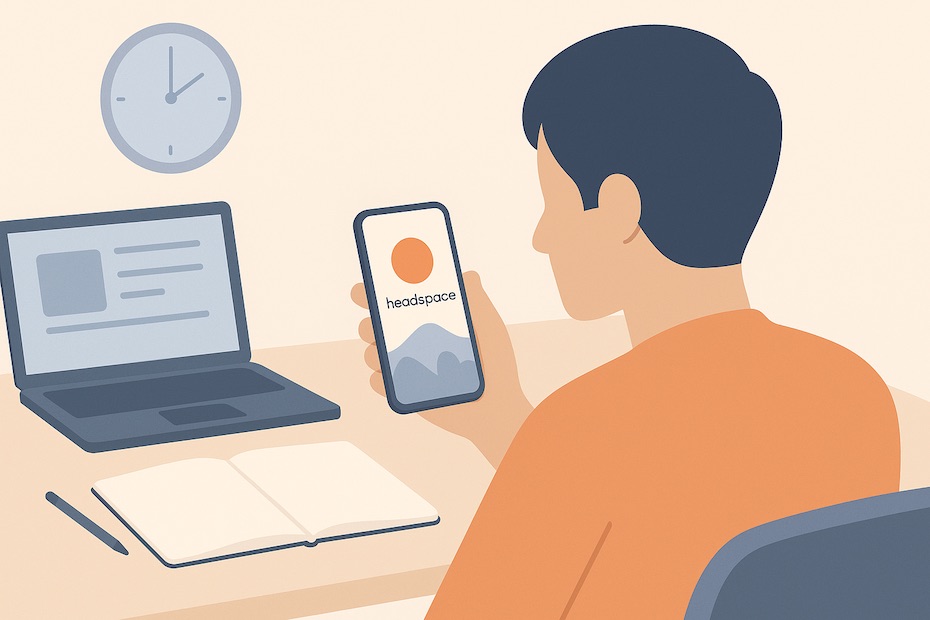
Headspace builds mental resilience by helping you train attention, regulate emotions, and recover from daily stress through guided meditation, mindfulness exercises, and cognitive tools.
In this article, you’ll learn how Headspace uses science-backed mindfulness to help you handle life’s challenges more effectively. You’ll see how its features work, what results to expect, and how to integrate it into your daily routine for sustainable emotional strength and mental endurance.
What Is Headspace, and How Does It Build Resilience?
Headspace is a mindfulness and meditation app designed to make emotional well-being accessible through practical daily practice. It uses guided sessions, breathing techniques, and educational modules to help you manage stress and enhance focus. But its real value lies in how it strengthens resilience—the ability to bounce back after setbacks and remain calm under pressure.
By training you to notice thoughts and feelings without judgment, Headspace helps you develop emotional flexibility. This awareness gives you a pause between reaction and response, allowing you to make measured decisions instead of impulsive ones. Over time, your mind learns to recover from stress faster and sustain stability through uncertainty.
Resilience doesn’t come from eliminating discomfort—it comes from building tolerance and understanding. Through consistent meditation, visualization, and focus training, you learn to observe challenges as passing moments rather than threats. That mindset shift, reinforced daily, becomes the foundation of lasting mental toughness.
How Does Science Support Headspace’s Impact on Mental Strength?
Headspace isn’t built on abstract philosophy—it’s backed by measurable evidence. Numerous peer-reviewed studies confirm its benefits in reducing stress, improving mood, and increasing focus. Research published in the Journal of Occupational Health Psychology found that employees using Headspace for 30 days reported a 32% decrease in stress and an 11% improvement in resilience.
In another study by the University of California, San Francisco, workers who practiced with Headspace reported lower burnout and higher engagement levels compared to control groups. This shows how mental training can translate into real-world performance improvement.
These studies align with broader research on mindfulness-based interventions. Regular meditation has been linked to reduced cortisol levels, improved emotional regulation, and changes in brain regions related to attention and self-awareness. By delivering these techniques in a structured, accessible way, Headspace turns complex psychological benefits into daily habits that strengthen mental resilience over time.
What Core Resilience Skills Does Headspace Strengthen?
Resilience is not one skill—it’s a combination of several mental and emotional capacities that work together to keep you steady. Headspace helps you strengthen three key pillars: focus, emotional regulation, and recovery.
Focus is trained through guided meditations that build your attention span and reduce distraction. You learn to sustain awareness on your breath, body, or surroundings, which translates to sharper concentration in daily life. Over time, this improved focus reduces anxiety and enhances decision-making under pressure.
Emotional regulation comes from learning to observe feelings without being consumed by them. Headspace sessions encourage nonjudgmental awareness, helping you identify emotions early and handle them more constructively. This prevents emotional overload and builds steadier reactions to stress.
Recovery is the third pillar. Through mindfulness breaks and sleep meditations, Headspace trains you to pause intentionally between stressful events. This restores balance faster and prevents burnout. Combined, these skills create a system of adaptive mental strength you can rely on regardless of circumstance.
Which Headspace Features Are Most Effective for Building Resilience?
Headspace includes a range of features, but certain modules are particularly effective for resilience development. The “Letting Go of Stress” series teaches you how to release tension through breathing and visualization. It’s especially useful during work overload or emotional turbulence.
The “Managing Stress in Uncertain Times” collection focuses on grounding exercises for moments when you feel overwhelmed by unpredictability. These meditations emphasize presence—training your mind to stay anchored in the current moment instead of spiraling into future worries.
Another standout feature is the “CBT for Mood and Anxiety” program. This series combines mindfulness with cognitive behavioral therapy principles to help you recognize and reframe unhelpful thought patterns. It’s ideal for addressing chronic stress or anxiety triggers.
Headspace also provides short “SOS” meditations—three-minute sessions designed for moments of crisis. These allow you to interrupt anxiety spikes before they escalate, reinforcing emotional agility.
How Can You Integrate Headspace Into Your Routine for Maximum Benefit?
The most effective Headspace users treat the app as a mental fitness routine—not a wellness experiment. Start small by committing to one 10-minute session each day. Whether you choose a morning meditation or an evening wind-down, consistency matters more than duration.
Pair your practice with situational triggers. For example, use a brief meditation before a high-stakes meeting or after a stressful conversation. This habit embeds mindfulness into your day instead of isolating it as a separate task.
Many users find that journaling after meditation amplifies results. Writing down what you noticed—without overanalyzing—deepens awareness and strengthens reflection. You can also combine Headspace with physical routines, such as using guided walking meditations or pairing it with breathing exercises before workouts.
Here’s a practical structure to follow daily:
- Morning: A 10-minute focus meditation to set tone and intention.
- Midday: A 5-minute check-in for stress recalibration.
- Evening: A 15-minute wind-down meditation for recovery and sleep readiness.
In just a few weeks, this schedule builds measurable changes in your composure and energy management.
What Outcomes Should You Expect From Consistent Use?
Consistency creates visible results. Within a few weeks, you’ll likely experience better emotional control, sharper attention, and reduced reactivity to stress. Users often describe fewer mood swings and a stronger sense of calm when facing uncertainty.
In the longer term, you’ll notice improved self-awareness—recognizing emotional triggers before they escalate—and better recovery speed after setbacks. Instead of feeling drained by challenges, you’ll respond with perspective and adaptability.
Headspace trains your nervous system to normalize calm as the default state, not the exception. You’ll begin to experience stress without being owned by it. This change doesn’t just improve well-being—it enhances professional performance, decision-making, and relationships.
Are There Any Limitations You Should Know?
Headspace is a powerful tool, but it’s not a replacement for therapy or medical care. It’s best viewed as a supplement that enhances your coping capacity, not a cure for chronic psychological disorders. If you’re dealing with trauma, depression, or severe anxiety, professional guidance remains essential.
Engagement consistency can also decline over time. Many users start strong but lose motivation after a few weeks. To prevent this, personalize your experience—switch content themes, track progress, and join community challenges. Momentum grows when you treat mindfulness like skill training rather than relaxation.
Another limitation is expectation. Meditation isn’t about eliminating stress—it’s about changing your relationship with it. When you stop expecting instant calm and start valuing awareness, the real benefits emerge naturally.
What Makes Headspace Different From Other Meditation Apps?
Headspace stands out because of its accessibility and scientific design. It combines mindfulness instruction with behavioral reinforcement, meaning it’s built to change habits—not just provide temporary relief. The sessions are short, structured, and guided by expert teachers trained in both meditation and psychology.
Unlike many competitors, Headspace integrates science into every update. Partnerships with universities and healthcare systems ensure that its methods remain evidence-based. The app also emphasizes education, helping you understand why each practice works, not just how to do it.
Headspace’s corporate partnerships with companies like Starbucks, Adobe, and Google show its practical use in high-performance environments. It’s not just a meditation app—it’s a performance and recovery system used by professionals across industries to manage stress at scale.
How Headspace builds resilience
- Improves focus and attention control
- Strengthens emotional regulation
- Speeds recovery from stress
- Enhances self-awareness and adaptability
Strengthen Your Mind, Strengthen Your Life
Resilience is not inherited—it’s built through deliberate training and repetition. Headspace gives you that structure, turning moments of stress into opportunities for growth. When you practice consistently, you cultivate a calmer mind, stronger focus, and the emotional agility to handle anything life brings your way.

Chrysilios Chrysiliou is a commercial real estate executive at RDPH Properties, Inc. with a diverse background in aviation and entrepreneurship. A former Greek Air Force Academy graduate, flight instructor, and flight school co-owner, he now leverages decades of strategic leadership to identify and develop high-value real estate opportunities.