
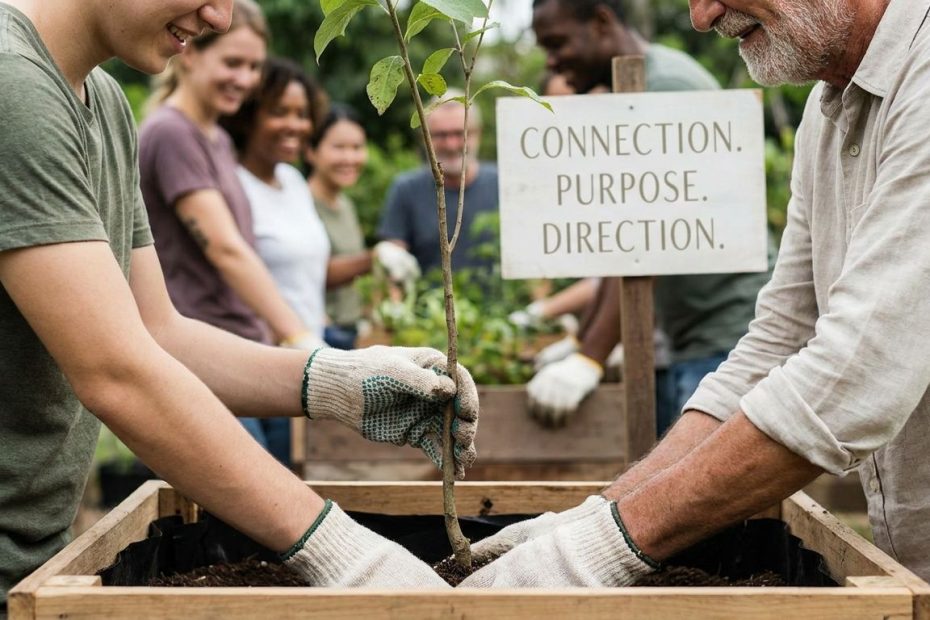
Local service can change your life direction by putting you in direct contact with real needs, new people, useful skills, and a clearer sense of purpose. When you serve close to home, your routine stops being only about getting through the week and starts showing you where your energy, care, and abilities can matter.
You may be doing what you’re supposed to do — working, managing responsibilities, keeping up with daily life — and still feel a quiet pull toward something more meaningful. This article explains how volunteering near you can reshape your identity, relationships, health, and career choices without requiring a dramatic life reset. You’ll see how small, steady acts of service can help you choose a direction that feels less random and more grounded.
How Does Local Service Help When You Feel Stuck?
Local service helps when you feel stuck because it moves you from overthinking into useful action. Instead of trying to solve your entire life on paper, you step into a real place where your presence helps someone today.
Feeling directionless often comes from too much inward pressure. You keep asking what your purpose is, what career fits, what decision will fix things, and why your current routine feels flat. Service interrupts that loop. A food pantry shift, neighborhood cleanup, library tutoring session, school event, or community support project gives you a concrete role before you have perfect answers.
That matters because purpose often shows up through participation, not isolation. You notice which problems make you pay attention. You discover which people you naturally want to support. You start seeing yourself as someone who contributes, not only someone who needs to figure everything out alone.
This is where local service differs from abstract self-improvement. It gives you feedback right away. You learn whether you enjoy organizing supplies, teaching, listening, fixing, planning, mentoring, coordinating, or simply showing up consistently. Those signals can become the first usable clues for a new life direction.
Can Volunteering Improve Your Mental Health And Happiness?
Yes, volunteering is linked with better mood, lower stress, stronger social connection, and fewer symptoms of depression and anxiety. Research summarized by HelpGuide and other health sources connects service with well-being benefits that go beyond feeling good for a moment.
One UnitedHealth Group volunteer study found that 94% of volunteers said volunteering improved their mood, and 78% said it lowered their stress levels. The same study found that 76% of volunteers said volunteering made them feel physically healthier. Those numbers matter because feeling better in your body and mind can make new decisions feel possible again.
When you’re stressed or isolated, your world shrinks. You may avoid change, assume your options are limited, or lose confidence in your ability to handle new situations. Serving others widens that world. It gives you regular contact, shared work, and a reason to leave the house that isn’t based on performance or self-promotion.
Volunteering also creates a healthier kind of attention. You’re not ignoring your own life, and you’re not pretending your problems don’t exist. You’re placing them beside other human needs, which can make them feel more workable. That shift can reduce the sense that your life is frozen.
Can Community Service Help You Find Your Purpose?
Yes, community service can help you find purpose by revealing what you care about through direct experience. You don’t need to identify your calling before you serve; service can help you discover it.
Purpose is often treated like a hidden answer you’re supposed to uncover alone. In practice, it’s easier to recognize through repeated contact with real work and real people. You may learn that you’re drawn to older adults, children, environmental work, housing support, literacy, health-related service, animal care, or practical neighborhood needs. Those patterns are not random.
Pay attention to what gives you energy after the work is done. Some tasks leave you tired but satisfied. Others drain you in a way that says the fit is wrong. That information helps you choose future commitments with less guesswork.
Research summarized by Action for Happiness notes that people who volunteer report higher life satisfaction than people who don’t. That doesn’t mean service solves every personal problem. It means giving your time in a meaningful way can add structure, connection, and direction to a life that has started to feel too narrow.
How Can Local Service Redraw Your Life Map?
Local service redraws your life map by changing what you notice, who you meet, and what you believe you’re capable of doing. Your city or town becomes more than streets, stores, and obligations; it becomes a network of needs and possible roles.
Before serving, you may see your life through a limited set of labels: job title, family role, income level, schedule, age, or past decisions. Volunteering adds new labels that can feel more alive. You become a mentor, organizer, helper, driver, listener, builder, coach, advocate, or reliable team member. Those roles can shift your self-image.
This matters because life direction is not only a decision. It’s also a collection of repeated experiences that teach you who you are becoming. When you serve weekly or monthly, you collect proof that you can enter unfamiliar rooms, learn new systems, and support people outside your usual circle.
Local volunteering near you can also make change feel less extreme. You don’t have to move away, quit everything, or reinvent your identity overnight. You can start with one nearby organization, one recurring commitment, and one honest question: “What does this work teach you about the kind of life you want?”
What Skills Can You Build Through Volunteering?
You can build communication, leadership, planning, problem-solving, teamwork, emotional steadiness, and practical job skills through volunteering. Many of these skills develop quietly because you’re focused on serving, not polishing a résumé.
At a local nonprofit, community center, school, shelter, or neighborhood program, you may learn how to coordinate schedules, welcome new people, manage supplies, explain instructions, handle pressure, or support someone who is having a hard day. These are real abilities. Employers, community leaders, and collaborators value people who can be dependable, calm, clear, and useful.
Volunteering can also reveal hidden strengths. You may discover that you’re good at training new volunteers, keeping records organized, calming tense situations, writing simple instructions, or noticing what needs to happen before anyone asks. Those discoveries can change how you think about your professional future.
Skill-building through service works best when you reflect after each commitment. Ask what you did well, what felt natural, what stretched you, and what you want to learn next. Over time, those answers can point toward education choices, career paths, leadership roles, or a new kind of work you hadn’t considered.
Can Volunteering Lead To A Career Change?
Yes, volunteering can lead to a career change by giving you low-risk exposure to new fields, people, and responsibilities. It lets you test an interest before you invest in training, applications, or a major professional shift.
Many career changes start with curiosity, not certainty. Service gives you a practical way to explore that curiosity. If you’re interested in education, you can tutor or support youth programs. If you’re drawn to public service, you can work with neighborhood initiatives. If you care about health, housing, food access, or environmental projects, local organizations can show you what that work feels like day to day.
Service also expands your network in a natural way. You meet coordinators, staff members, board members, volunteers, donors, and community partners. These relationships are built through shared effort, so they often feel more genuine than formal networking events.
A career pivot through service should be measured carefully. Track the tasks that energize you, the problems you keep thinking about, and the people whose work you respect. After several months, you may have enough evidence to choose a course, apply for a role, request an informational conversation, or reshape your current job around the parts of service that matter most to you.
Why Do Social Connections Matter So Much?
Social connections matter because isolation can make your life feel smaller than it is. Serving with others gives you shared purpose, repeated contact, and a healthier reason to build relationships.
HelpGuide notes that volunteering can strengthen social connections and help combat loneliness. That’s a major part of why service can change direction. You’re not just meeting people; you’re meeting people while doing something useful together. That shared work reduces the pressure to perform socially.
If you feel anxious about joining a group, choose structured roles at first. Sorting donations, preparing meals, setting up chairs, checking people in, or helping with cleanup can give you a clear task and a natural way to interact. You don’t have to become outgoing overnight. You only need to be dependable and open enough to return.
Over time, those repeated interactions can become a support system. You may meet someone who introduces you to a new field, recommends a book or training program, invites you into a committee, or simply helps you feel less alone. Direction often becomes clearer when you stop carrying every question by yourself.
What If You Don’t Have Time, Skills, Or Energy?
You can still serve effectively with limited time, basic skills, and uneven energy. The best starting point is a small commitment that you can keep, not a demanding role that burns you out.
Research summarized by HelpGuide points to roughly 2–3 hours a week, or about 100 hours a year, as a useful range for well-being benefits. That doesn’t mean you must begin there. If your life is full, start with one shift a month, a seasonal project, or a short recurring task that fits your schedule.
If you think you don’t have skills, look for roles that need reliability before expertise. Many organizations need people to greet visitors, sort items, make reminder calls, deliver materials, prepare rooms, record information, or help at events. These tasks matter because service organizations depend on consistent support.
If your energy is low, choose a role that matches your current capacity. Some people do better with quiet behind-the-scenes tasks. Others need active, people-facing work to feel engaged. The right fit should stretch you a little, not leave you depleted for days.
How Do You Find The Right Local Service Opportunity?
You find the right local service opportunity by matching your values, schedule, energy, and growth goals with a real community need. The goal is not to pick the most admirable option; the goal is to choose one you can sustain.
Start with three filters. Choose a cause you care about, a role you can realistically perform, and a schedule you can repeat. If one of those three is missing, the opportunity may look good but fail in practice. Sustainable service depends on fit.
Ask direct questions before committing. What tasks will you do? Who will train you? How often are volunteers needed? Can you shadow someone first? What does success look like in this role? Good organizations usually welcome these questions because they want volunteers who understand the work.
After your first few sessions, review the fit. Notice whether the work gives you a clearer sense of usefulness, connection, or curiosity. If it doesn’t, you haven’t failed. You’ve gathered information, and you can choose a different form of local service that better matches your season of life.
How Can Local Service Change Your Life?
- Builds career skills and networks
- Reveals personal passions
- Adds purpose and lowers stress
- Strengthens community ties
- Helps you see problems differently
Choose A Direction By Serving Close To Home
Local service changes your life direction by giving you evidence, not just inspiration. You learn what you care about, which skills you can build, who strengthens your life, and which needs pull your attention. The shift can begin with a small role that fits your real schedule, then grow into better health, deeper connection, new confidence, and a clearer path forward. If you feel stuck, don’t wait for perfect certainty before taking action. Start close to home, serve consistently, and let the work teach you what your next direction should be.
References
- UnitedHealth Group – Doing Good Is Good For You Volunteer Study
- HelpGuide – Volunteering And Its Surprising Benefits
- AmeriCorps – The Health Benefits Of Volunteering: A Review Of Recent Research
- Action For Happiness – Volunteering And Wellbeing
- Mayo Clinic Health System – Volunteering And Health Benefits
- Harvard Health Publishing – The Health Benefits Of Volunteering.

Chrysilios Chrysiliou is a commercial real estate executive at RDPH Properties, Inc. with a diverse background in aviation and entrepreneurship. A former Greek Air Force Academy graduate, flight instructor, and flight school co-owner, he now leverages decades of strategic leadership to identify and develop high-value real estate opportunities.