
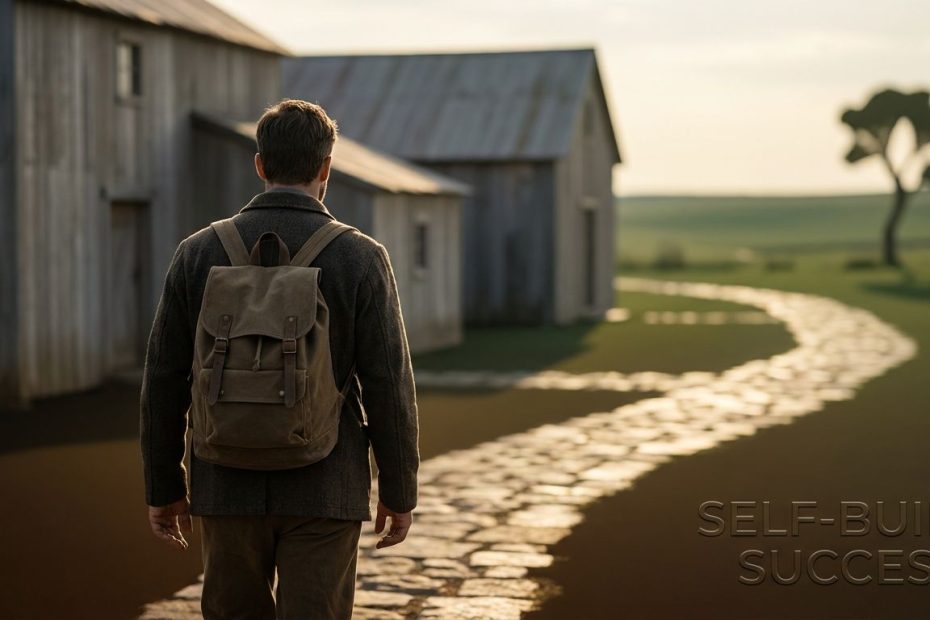
Ordinary beginnings often build extraordinary lives because they train you to solve problems, use limits well, and keep moving without waiting for perfect conditions. A modest start doesn’t guarantee success, but it can give you habits that wealth, comfort, and easy access often fail to teach.
If you’ve ever felt behind because you didn’t start with money, status, elite schooling, or a ready-made network, this article gives you a grounded way to rethink your story. You’ll see what research says about self-built success, why resilience grows through manageable struggle, and how to turn an ordinary origin into a stronger future without romanticizing hardship.
The Secret Strength You Didn’t Know You Had
An ordinary beginning can feel invisible. You may not have a famous last name, a wealthy family, or a room full of people opening doors for you. That can make progress feel slower, especially when you compare your starting point to someone else’s head start. Yet ordinary beginnings often build extraordinary lives because they force you to notice what works, what doesn’t, and what you can control.
That kind of start tends to make you practical. You learn to stretch time, money, attention, and energy. You learn that no one is coming to rescue every plan, so you build small systems that keep you moving. Over time, those systems become discipline, judgment, and emotional steadiness.
This doesn’t mean struggle is automatically good. Hardship can drain people, limit choices, and create real barriers. The point is more precise: when your challenges are survivable and you learn from them, they can sharpen traits that later become advantages. Your beginning may be plain, but plain does not mean powerless.
The Data Looks Different Than You Think: Most Success Is Self-Built
Many people assume wealth and achievement mostly come from inheritance. That belief is understandable because privilege is visible, and inherited advantage can speed up progress. Still, several surveys show that many financially successful people did not begin at the top. A Fidelity Millionaire Outlook study reported that 86% of millionaires did not inherit major wealth.
A TD Ameritrade survey found that 74% of millionaires came from middle-class or poor backgrounds. That number matters because it pushes back against the belief that ordinary people are locked out from building uncommon outcomes. It doesn’t erase barriers, and it doesn’t claim every person gets the same path. It shows that modest origins and later success can exist in the same life.
Entrepreneurship research points in a similar direction. The Kauffman Foundation’s study of company founders found that most surveyed entrepreneurs came from middle-class or lower-middle-class backgrounds, with only a small share coming from very wealthy families. That pattern fits what you often see in real professional practice: the people who build lasting progress are often the ones who learned early how to work with constraints.
What Ordinary Beginnings Teach That Privilege Cannot
Ordinary beginnings teach you how to make decisions without excess padding. When money, time, and access are limited, you can’t hide behind endless options. You have to choose, adjust, and learn quickly. That creates a kind of practical intelligence that grows through use.
You also learn the value of earned trust. If you don’t have status doing the talking for you, your work has to speak with consistency. You show up prepared, follow through, and build a reputation one decision at a time. That can feel slow, but slow trust often lasts longer than borrowed credibility.
Privilege can provide safety, education, and useful connections, and those advantages are real. Ordinary beginnings teach different lessons: patience, observation, self-control, and the ability to recover after a plan fails. Those lessons don’t look dramatic in the moment. Later, they become the traits people call extraordinary.
The Psychology Of The Underdog: How Adversity Wires You For Grit
Research on adversity suggests that some hardship can build resilience when it does not overwhelm a person. A study discussed in Psychology Today found that people with moderate lifetime adversity reported lower distress and greater life satisfaction than people with no adversity or very severe adversity. That distinction matters. Manageable struggle can strengthen you, but severe hardship can harm you.
Angela Duckworth’s work on grit also helps explain why ordinary beginnings often build extraordinary lives. Grit combines perseverance with long-term commitment. It is not raw talent, luck, or a burst of motivation. It is the habit of continuing after the exciting part fades.
If you grew up needing to work around limits, you may already have practiced grit without naming it. You learned how to finish tasks when conditions were less than ideal. You learned how to keep going after rejection, delay, or embarrassment. Those patterns can become a career advantage, a leadership advantage, and a personal advantage.
Resourcefulness Over Resources: Why Limitations Fuel Innovation
When you have fewer resources, you often become better at using what is available. You compare options carefully, repair before replacing, ask sharper questions, and avoid wasting effort on work that doesn’t move the result. That habit can later help you in business, education, family decisions, and career growth. Resourcefulness is not a slogan; it is a skill built through repeated problem-solving.
People from ordinary beginnings often learn to test ideas early. If you don’t have unlimited money or time, you can’t afford to build a perfect plan in private for years. You look for proof, feedback, and small wins. That makes you more adaptable in real settings where conditions change and no plan survives untouched.
Limitations can also teach clarity. You learn to separate wants from needs, status from substance, and activity from progress. Those distinctions matter because extraordinary lives are rarely built by doing everything. They are built by choosing what deserves your best attention, then returning to it day after day.
Real Stories: From Log Cabins And Welfare Lines To World Changers
History gives you familiar examples of ordinary beginnings leading to uncommon impact. Abraham Lincoln was born in a one-room log cabin and became known for self-education, persistence, and public leadership. His early life did not offer ease or polish. It offered work, reading, loss, and the need to grow through difficulty.
J.K. Rowling’s path also shows how a difficult season can sit inside a larger life story. Before global literary success, she lived through financial strain and single parenthood. Her story is not useful because it makes hardship sound glamorous. It is useful because it shows that a low point does not have to become a final identity.
Oprah Winfrey’s early life included rural poverty and instability before she became one of the most recognized media figures in the world. Stories like these should not be treated as simple proof that anyone can overcome anything by wanting it badly enough. They are better read as reminders that ordinary origins do not decide the full size of a life. Talent, timing, help, endurance, and repeated choices all matter.
When Humble Beginnings Aren’t A Superpower
Humble beginnings are not magic. Lack of money can delay education, limit healthcare access, shrink your network, and force you into survival decisions. It is dishonest to pretend that every barrier is just character training. Some barriers are real walls, and you may need support, planning, and outside resources to move past them.
The research on adversity also warns against romanticizing pain. Moderate adversity can build resilience, but extreme adversity can damage health, confidence, and opportunity. If your past left wounds, you do not need to rename those wounds as gifts. You can respect what you survived without pretending it was fair.
A grounded view gives you more power than blind optimism. You can name the disadvantage and still use the strengths it produced. You can seek mentors, education, community, better financial habits, and better work environments without shame. Building an extraordinary life from an ordinary beginning is not about denying the gap; it is about closing it with skill.
Turning Your Ordinary Origin Into An Extraordinary Finish
Start by identifying the strengths your beginning already trained. Maybe you know how to stay calm under pressure, learn without fancy tools, stretch a budget, read people well, or keep working without applause. Write those strengths plainly. They are not personality trivia; they are assets you can apply with intent.
Then choose a measurable direction. Extraordinary lives are not built from vague ambition. Pick a skill, business goal, health target, education path, or financial habit you can track. The goal should be specific enough that you can review progress weekly and adjust your effort without guessing.
You also need better rooms. Ordinary beginnings can teach independence, but no one builds well in isolation forever. Look for mentors, peer groups, training programs, professional communities, and people who treat growth as normal. The right environment won’t erase your past, but it can expand what your past prepared you to do.
Why Ordinary Beginnings Often Build Extraordinary Lives In Daily Practice
The phrase ordinary beginnings often build extraordinary lives becomes real through habits, not speeches. You build a larger life by managing small decisions with care: how you spend, what you study, who you listen to, what you finish, and how you recover after failure. These choices seem small until they compound. Then they become your reputation.
One practical method is to review your constraints without resentment. Ask what limit you are dealing with, what skill would reduce that limit, and what action you can take this week. If money is tight, build financial literacy and income skills. If your network is thin, start making useful professional contact through service, learning, and follow-through.
Another method is to stop waiting for confidence before action. Confidence often arrives after evidence, and evidence comes from doing. Finish the course, send the proposal, practice the interview, publish the work, save the first amount, make the first call. An extraordinary finish usually begins with ordinary actions repeated after the mood has passed.
Do Most Successful People Come From Ordinary Backgrounds?
- Yes, many do.
- Most surveyed millionaires are self-built.
- Many grew up middle-class or poor.
- Moderate adversity can build grit.
You Don’t Need A Head Start To Build A Life That Stands Out
Your beginning matters, but it does not get the final vote. An ordinary start can train you in patience, resourcefulness, grit, and clear thinking, especially when you turn those traits into deliberate action. The data on self-built wealth and founder backgrounds supports a practical truth: many people who build uncommon outcomes begin without rare advantages. Respect the barriers, use the strengths, and stop treating your starting point as a verdict. The life ahead of you is built less by where you began and more by what you keep choosing after the beginning is over.
Reference Links
- CNBC: Here’s How Many Millionaires Are Self-Made
- CNBC: 74% Of Millionaires Didn’t Grow Up Wealthy, Survey Finds
- Kauffman Foundation: The Anatomy Of An Entrepreneur
- Kauffman Foundation Report PDF
- Psychology Today: The Benefits Of Adversity
- TED: Angela Lee Duckworth On Grit
- Abraham Lincoln Early Life
- Britannica: J.K. Rowling Biography
- Biography: Oprah Winfrey

Chrysilios Chrysiliou is a commercial real estate executive at RDPH Properties, Inc. with a diverse background in aviation and entrepreneurship. A former Greek Air Force Academy graduate, flight instructor, and flight school co-owner, he now leverages decades of strategic leadership to identify and develop high-value real estate opportunities.