
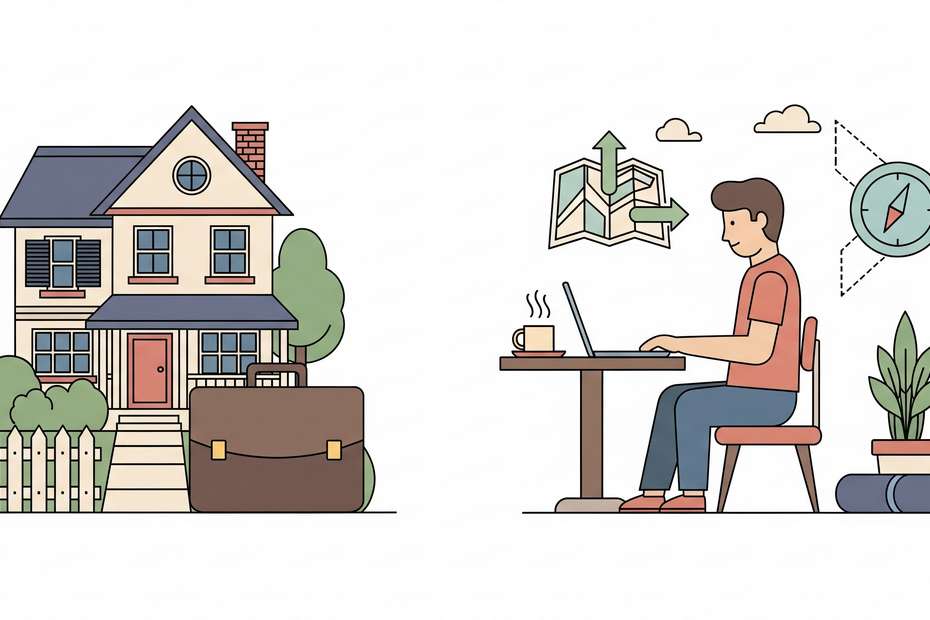
You need a modern makeover for your American Dream because the traditional version—homeownership, lifelong career stability, and retirement security—no longer reflects today’s realities or your priorities.
This article shows you how to reshape the American Dream into something more practical and meaningful. You’ll see which old assumptions don’t hold up, what younger generations are doing differently, and how you can update your own version to match today’s world.
What is the traditional American Dream, and why is it breaking down?
Traditionally, the American Dream meant buying a house, landing a steady job, raising a family, and retiring comfortably. This formula worked when wages grew alongside costs and single-income households were common.
Today, the costs of education, housing, and healthcare rise faster than incomes. According to Pew Research, only 28% of young adults believe they will be better off than their parents, compared to nearly 60% who said so in the 1970s. That gap signals a mismatch between the old Dream and today’s economic environment.
When you define your Dream by old markers that are increasingly unattainable, you set yourself up for frustration. Recognizing this shift is the first step toward rewriting your goals.
How are Millennials and Gen Z redefining success?
Millennials and Gen Z still care about success, but they’ve changed the definition. According to a report from the Independent Center, 70% of younger Americans rank fulfillment above wealth as their measure of success.
They value flexibility, remote work options, travel, and creative freedom. Many say owning a large home or climbing a rigid corporate ladder is less important than maintaining mental health and pursuing work they find meaningful.
For you, this means reframing success around your values—not around a cultural script that no longer matches how people live and work.
What barriers make the old Dream harder to reach?
Several obstacles stand in the way of the old Dream. Housing affordability is at record lows, with mortgage rates and home prices stretching beyond reach for many. Student debt delays milestones like marriage and homeownership. Healthcare and childcare costs eat into disposable income.
A MarketWatch survey showed that Americans now believe they need $1.2 million in savings to feel secure, compared to $500,000 a decade ago. Yet fewer than 30% believe they’ll ever hit that number.
When financial security feels out of reach, the traditional Dream becomes less relevant. You need a version that accounts for new economic realities.
Why is stability replacing opportunity as the priority?
In the past, the Dream promised opportunity: upward mobility, rags-to-riches potential, and unlimited growth. But today, stability is more valuable than chasing extreme upward movement.
Gallup surveys show that younger Americans prioritize predictable income, affordable housing, and healthcare access over high-risk, high-reward opportunities. The emphasis has shifted from “How high can I climb?” to “How secure am I day to day?”
This shift doesn’t kill ambition—it grounds it. You can still pursue opportunity, but stability forms the foundation you need to take risks strategically.
What role do fulfillment and well-being play in the new Dream?
Fulfillment is no longer optional—it defines the Dream. Mental health, strong relationships, and autonomy rank higher than material possessions in surveys of younger generations.
According to Close Up Foundation research, younger Americans describe the Dream less as “a house with a yard” and more as “living authentically and with purpose.” That includes aligning your work with your values, having time for hobbies, and avoiding burnout.
For you, this means budgeting for mental health resources, choosing employers who respect work-life balance, and building time for personal passions into your definition of success.
Key areas to include in a modern Dream:
- Emotional well-being alongside financial goals
- Time flexibility and control over schedules
- Experiences—travel, learning, relationships—over possessions
- Autonomy and freedom to change directions
- Sustainability and long-term security
When you focus here, your Dream becomes more resilient to outside pressures.
How can you modernize your American Dream today?
Updating your Dream requires intentional steps that align with your current environment. Start by identifying your non-negotiables. Do you want location freedom? Stable income? Less stress? Write those down.
Second, redefine success in measurable but flexible terms. Instead of chasing “a big house,” you may target “financial stability with manageable housing costs.” Instead of “retiring at 65,” you may aim for “financial independence by 50 through multiple income streams.”
Finally, build resilience. That means diversifying your income, upgrading your skills, and managing debt responsibly. By focusing on agility, you prevent your Dream from collapsing when one pillar shakes.
What data shows the Dream already changing?
The shift isn’t hypothetical—it’s measurable.
- 73% of Millennials and Gen Z say the American Dream is still important, but only half think the traditional version is relevant.
- 60% of young respondents in a UCLA study said they believe the Dream is achievable in society, but many doubt it’s achievable for them personally.
- Independent Center research found that fulfillment, stability, and flexibility consistently outrank wealth and status for younger respondents.
These numbers show a broad cultural transition. You’re not alone in wanting a Dream that prioritizes meaning and stability over outdated milestones.
Can you keep parts of the old Dream that still work?
Yes, you don’t have to throw everything out. Education, ownership, and entrepreneurship still hold value—but you must adapt them.
Education now includes lifelong skill-building, not just one degree. Ownership may mean a smaller home in an affordable area instead of a sprawling property. Entrepreneurship might include a digital side hustle instead of a brick-and-mortar business.
When you adapt these elements, you preserve what works while discarding what doesn’t. That balance gives you a Dream rooted in both tradition and practicality.
What outcome can you expect from a modernized Dream?
By reshaping your Dream, you set yourself up for satisfaction rather than frustration. You’ll stop measuring yourself against outdated benchmarks and start building a life aligned with your priorities.
The result is a Dream that feels attainable, flexible, and rewarding. It may look smaller on the surface—less about big houses, more about steady well-being—but it produces more meaningful success that sustains you long term.
What is the modern American Dream?
- Defined by fulfillment, flexibility, and stability
- Less focus on status, more on well-being
- Old elements like homeownership and education remain, but in scaled, attainable forms
In Conclusion
Your American Dream needs a modern makeover because the old formula doesn’t match current economic realities or cultural priorities. By emphasizing stability, fulfillment, and personal values while adapting useful parts of the old model, you’ll build a Dream that is realistic, meaningful, and sustainable for your life.

Chrysilios Chrysiliou is a commercial real estate executive at RDPH Properties, Inc. with a diverse background in aviation and entrepreneurship. A former Greek Air Force Academy graduate, flight instructor, and flight school co-owner, he now leverages decades of strategic leadership to identify and develop high-value real estate opportunities.